
13 Questions for Nathan Knapp
Nathan Knapp is author of Schopenhauer, forthcoming 25 September from Erratum Press, and Daybook (Splice, 2024), which was long-listed for the 2025 Republic of Consciousness Prize. A native of southeast Oklahoma, he lives and writes in Nashville, TN.
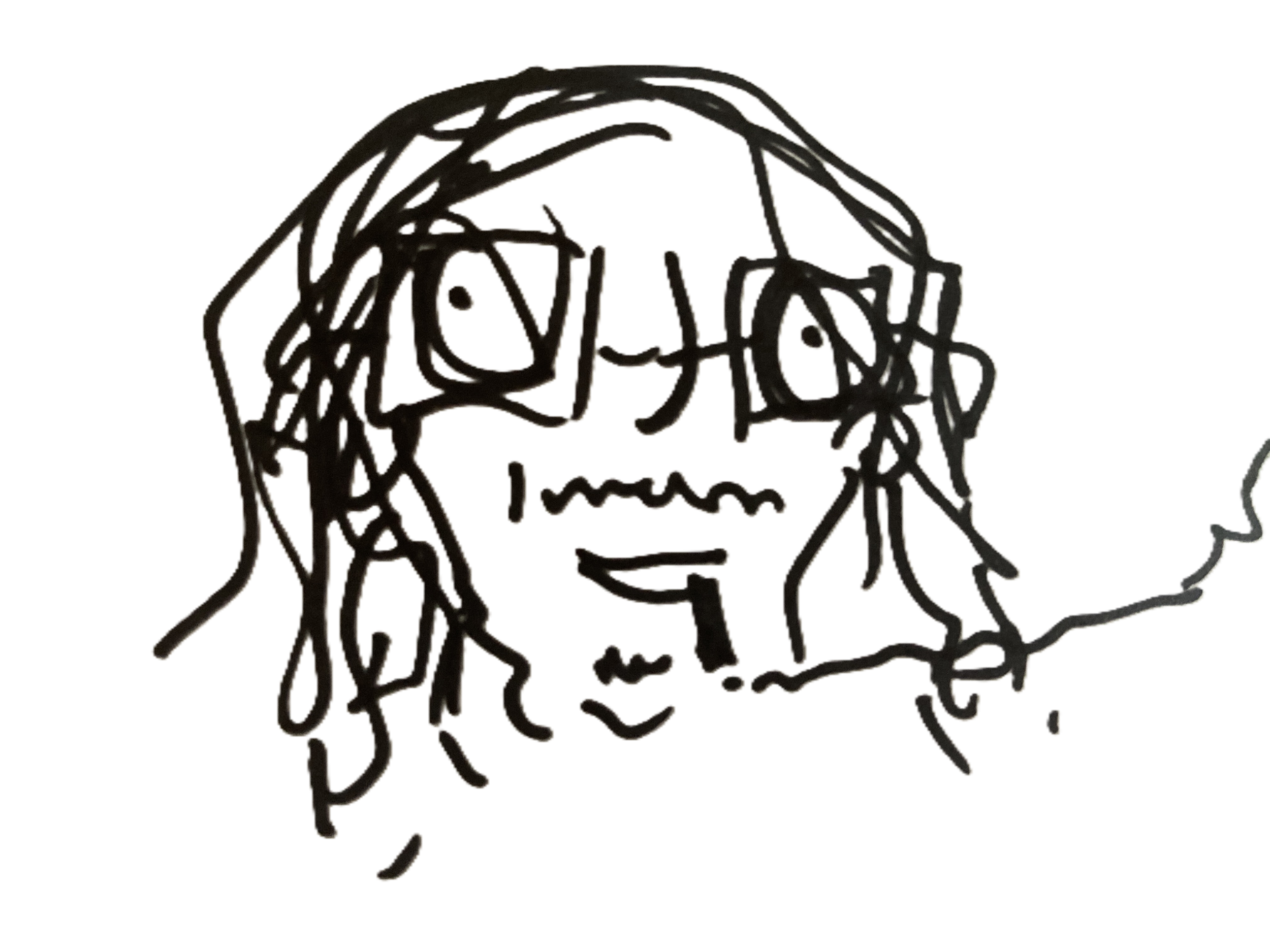
Nathan, self-portrait
What are you reading now?
Recently on a Faulkner kick: read, for the first time, As I Lay Dyingback in the spring, Light in Augustat the start of the summer, and perhaps rushed too quickly intoAbsalom, Absalom!as I’ve had to set it aside to get my bearings. But I will go back to it. This past weekend I’ve been reading Turgenev’s A Sportsman’s Notebook—an immense pleasure! Karl Ove Knausgård has described it as a masterpiece of world literature and I can see why it appeals particularly to him, the way Turgenev inhabits the world he’s describing, and does so with such presence, such a closeness to the reality of his characters and their setting, their woods and fields, their patterns of speech. I grew up in the country, the middle of nowhere really, and Turgenev’s book has the granularity and smell of that life spent more outdoors than in, that I often fail to realize how much I miss. I just happened to pick up the Turgenev book but reading the Faulkners has been the result of both trying to plug in some of the gaps in my personal education, and because The Sound and the Furyis one of my favorite novels of all time, one I return to, so it’s seemed to me like a personal failing not to have read the other major works of probably the most significant American writer—and a chance, after having seen such claims repeatedly over my lifetime as a reader, now in my mid-to-late thirties (awfully late but better late than never!) to test their validity. It feels silly to say, because perhaps self-evident, but his work is just fucking staggering, it bowls you over.
What book(s) most altered your taste in literature?
This has happened several times, but I think probably the book that most fundamentally altered my taste was David Markson’s Reader’s Block. After reading that book I gobbled up all the rest of Markson that I could find—the other Notecard Quartetbooks, Wittgenstein’s Mistress, and the perennially under-read Springer’s Progress. Coming across Markson in grad school was a kind of lifeline. No plot, no characters (or barely either of those), his books are composed of a single and singular intelligence. At some point a few years later I finally read Ulysses. Reading that book felt like it unlocked the world, it took me a large part of one autumn to do it, and rewired my sense of what can be accomplished in a novel—Joyce has such ambition not only for himself but for his audience, too; when I look back on my life as a reader there’s a dividing line: before having read Ulysses and after.
Describe the last time a work of literature affected you physically?
I will say as far as actually laughing out loud goes, Charles Portis kills me, and I come back to him again and again. As far as visceral responses go, there was a passage I read a few weeks ago in Light in August: “He laughed back, into the lamp; he turned his head and his laughing, running on up the stairs, vanishing as he ran, vanishing upward from the head down as if he were running headfirst and laughing into something that was obliterating him like a picture in chalk being erased from a blackboard.” Actually shivered when I read that. There’s something intimidating that one can at times feel reading Faulkner, and I think that it’s the sheer depth of reality, or maybe it would be better to say reality itself, that he can cram into a single line of description a reality at its most vertiginous, swift, dark, dizzying.
There’s a description of a house fire in the same book, in which he describes a fire truck pulling up amongst a crowd of onlookers:
About [the firetruck] hatless men and youths clung with the astonishing disregard of physical laws that flies possess. It had mechanical ladders that sprang to prodigious heights at the touch of a hand, like opera hats; only there was now nothing for them to spring to. It had neat and virgin coils of hose evocative of telephone trust advertisements in the popular magazines; but there was nothing to hook them to and nothing to flow through them. So the hatless men, who had deserted counters and desks, swung down, even including the one who ground the siren. They came too and were shown several different places where the sheet had lain, and some of them with pistols already in their pockets began to canvass about for someone to crucify.
You just can’t beat that, can you?
Please share a passage from the book nearest at hand.
From the only other book on the cast-iron table on my patio where I do most of my writing, Gilbert Sorrentino’s Something Said, in an essay on the poet William Bronk:
The only writers worth paying attention to are those who view the world as tragic, and those who view it as comic, i.e., those who ‘laugh to keep from crying.’ All the rest are in the process of giving one ‘hope,’ or worse, they are ‘changing things.’ But things change far, far from the artifacts of art. To understand that the world is not ours for the taking, and to understand further that it will not yield up anything that it does not intrinsically possess, seems to me to be the only program that a serious writer can subscribe to. […] The meaning of life lies in the pattern it makes, no more and no less. Nothing is unfair, since unfairness assumes that the world should be ‘some way.’ The world is.
(Emphasis mine.)
This feels important to me on several levels. The first being that beauty exists and art is worth making in part because of the awfulness of the world. The second being that the project of the serious writer ought to be show that world precisely for what it is rather than what one might want it to be, and that doing so lies in discerning and depicting the patterns of the world in which we live as they are… which means that the world as the writer depicts it—whether he is essentially tragic or comic in outlook—must on some level be both as complex and as simple as it is in reality. The latter outlook gives you Norwood, to me one of the greatest comic novels ever written, a book about ostensibly simple people, and the way that their simplicity both exposes them to and insulates them from the world, and the former gives you something like Faulkner, who gives us the inextricably inescapable nightmare that is American life, American history, in all its violence. I wonder if that’s the reason Portis never went in for darkness per se, aside from one magnificent scene in Masters in Atlantis: he knew his gifts lay in the other direction. But I am rambling now.
A person that reads runs the risk of thinking. This should be avoided at all costs. Thinking, after all, when it happens, is destructive at worst and painful at best.
How do you treat the books you read?
I tend to baby them a bit when they are new but if I get involved in them at all I end up writing in them all the time. I no longer check out library books, having owed every previous library I’ve ever been a member of at least $80, but used to get a special pleasure out of writing in library books with ink pens (this is not why I’ve owed every library I’ve ever been a part of so much money, the librarians aren’t paid enough to care about that shit; it’s because I seem to be congenitally unable to return any book I’ve ever taken home). Something of the vandal in that. But also an urge or expression of the urge not to stand in awe of anyone I read (despite my recent awe in Faulkner): therefore to write in each and every book that moves me enough to read it until the end. No book holy enough not to be written in. A special thrill of writing in a first edition: this may be a rare copy but it is my rare copy and by God I will write in it. At the start of every semester I make a show of throwing the assigned texts across the front of the room in an effort to get my students to dig into their books if not deface them. I don’t think this actually works but thoroughly enjoy the looks of indignation and surprise and sometimes the nervous giggling that accompanies this. Books, if they are loved, ought to be treated roughly. After all, they have such strange and mysterious capacities to ruin lives, and in that sense, arch-conservatives are right to burn them when they can. A person that reads runs the risk of thinking. This should be avoided at all costs. Thinking, after all, when it happens, is destructive at worst and painful at best. Books are dangerous. The fewer of them read the better and fortunately the culture at large is catching on to this.
What quality do you most appreciate in a novel?
Presence. The presence of the author on full and intimate display. Their intelligence, their despair, their humor, their lusts and desires, all of it. I want a work to take me as Jesus took Thomas in that upper room and say touch me here. Probably this is why I’m so often drawn to autobiographical work, or why I used to be, and though I’d argue you can feel this presence in authors who aren’t autobiographical at all: you can feel Faulkner in his texts in part because he forces you to see the world through his eyes. The same with To the Lighthouseby Virginia Woolf, another classic that I only got to rather recently. One gets the feeling that the way she depicts the inner lives of the characters in that book is very related or actually of a piece with the way that Woolf sees and experiences the world… her achievement lies not just in the sounds of her sentences and her incredible deployment of language but in transmitting her way of experiencing life with such force that the reader cannot help but also experience life that way, her way, for the duration of the novel. After I put that book down I asked myself how could she not have committed suicide.
…if you’re reading the same stuff as everyone else won’t that have a kind of homogenizing effect on your writing?
Who is an author you feel should be more widely read?
This for me is a tricky question, I think because I retain from my teenage years of discovering and listening to obscure music (or music I thought was obscure) that pleasure in feeling like I’m one of the only people who knows about something. Which is silly of course. I do, however, think there’s real value for a writer in keeping their reading tastes or habits off the beaten path, at least when it comes to contemporary literature: if you’re reading the same stuff as everyone else won’t that have a kind of homogenizing effect on your writing? Then again, there are certain foreign writers I wish more people read for the simple fact that they have untranslated books that might theoretically be more likely to be translated and published in English if more people read them, and in that sense I wish two Norwegians, Dag Solstad and Tomas Espedal, had more readers. Also a Swiss writer, Markus Werner. Most of his work has been translated into English but is out of print and utterly impossible to find. Alina Stefanescu recommended his Zündel’s Exitto me last year and it was one of the best books I read last year.
What book are you avoiding reading?
So many. And so many that would be embarrassing to name, representing little more than a kind of demonstration of both the poverty of my own education and the immensity of my ignorance, which is not inconsiderable. I will say that as someone raised deep in the woods of southeast Oklahoma, who prayed the prayer many times before eventually leaving the faith after leaving home, I would like to re-read the Bible in the King James Version. But I’m not sure I could bear to be seen toting around the thing, not here in Nashville, where it remains the book you’re most likely to see someone reading in a coffee shop or café. Someone might get the wrong idea.
What novel would you add to our current season (on Family) and why?
The first thing that comes to mind is The Notebookby Ágota Kristóf. It’s a short novel about two unnamed brothers abandoned in a war-torn border town during the Second World War. Formally, it is a wonder. Or maybe I should say nightmare. A terrifying and discomfiting book. Absalom, Absalom!of course, would also be quite an addition to that list.
To immerse oneself in literature is to refuse the soft blanketing of bullshit which calls out to us everywhere from the screens we carry in our pockets and look at each and every day.
What book would you like to be the last one you read before you shuffle off this mortal coil?
What makes you think I am going to die? As far as I’m concerned, it will not happen in my lifetime. In the unlikely event that it does happen… I hope someone will sing to me.
If you were to design a literature course around a singular word, what word would that be, and what books might appear on the reading list?
Probably the word oblivion. Pascal’s Pensées, a good dose of E.M. Cioran, Thomas Bernhard’s Gathering Evidence, Javier Marías’s Your Face Tomorrow. The void is the one thing that is both an inevitable part of life and its antithesis. It colors everything and one might even say that it even gives life its color but it’s also the thing that casts all the shadows. The first two writers in that list might make more sense in a philosophy course than a literature course but philosophy only matters to me insofar as it’s a branch of literature and deals with that which literature and only literature deals best—the fact that we die, and the questions of how and why and what in relation to that fact; literature matters most to me, deep down, as a place where we wrestle with these questions (and in turn laugh at them, or rather laugh at our persistent bumbling of them: an alternate course for this, or maybe its complementary, would be a course on comedy, featuring Tristram Shandy, Bernhard’s The Lime Works, Witold Gombrowicz’s Diary, and Solstad’s Shyness and Dignity—which, of course, Sterne excepted, would also be a course on oblivion). In a sense it would be a course on living with the terror of the void, or as Pascal puts it:
When I consider the short duration of my life, swallowed up in the eternity before and after, the little space which I fill, and even can see, engulfed in the infinite immensity of spaces of which I am ignorant, and which know me not, I am frightened, and am astonished at being here rather than there; for there is no reason why here rather than there, why now rather than then. Who has put me here? By whose order and direction have this place and time been allotted to me?
Those are the questions that most interest me as a writer, as a person.
In what character in literature do you most recognize yourself?
During my twenties my answer to this question would probably have been Ivan Karamazov, which is funny since on your podcast re: The Brothers Karamazovthe two of you say something similar, but I think if I’m being truthful the character in whom I most recognize myself is Binx Bolling in Walker Percy’s The Moviegoer. Just as Binx is just as comfortable sitting at his mother’s family’s fishing shack drinking beer under a naked 45-watt bulb as he is talking philosophy in his aunt’s parlor—in a sense here we also see the two poles of Portis and Faulkner—I’m just as happy watching a baseball or football game yelling my head off as I am alone with a book in my hand. But I do like to be alone.
Why read literature?
One of my favorite answers to this question comes from Michel Houellebecq, of all people, who, when asked it, said something to the effect of: Because we live only one life. Literature is a way to live more than one life. It is also a reminder of the absolute richness and fullness of life itself. Our world, our America, is hollow and stupid and the people in power are doing everything they can, day after day, to make it hollower and stupider and to make us hollower and stupider, in order both to wall us off from genuine beauty and simultaneously immure us from the flashing and bursting horror of what is going on each and every day. To immerse oneself in literature is to refuse to be part of this process. To immerse oneself in literature is to refuse the soft blanketing of bullshit which calls out to us everywhere from the screens we carry in our pockets and look at each and every day. To read, to refuse all that, is to embrace the world.
Read Nathan’s short-fiction “A Discourse Upon Foreskins”
Follow Nathan on X/Twitter here. Buy his novels Daybook and Schopenhauer.