
A Discourse Upon Foreskins
“Wherefore David arose and went, he and his men, and slew of the Philistines two hundred men; and David brought their foreskins, and they gave them in full tale to the king, that he might be the king's son in law. And Saul gave him Michal his daughter to wife.”
1 Samuel 18:27, King James Version
When he at last reckoned that he was not going to get any writing done at the long rectangular table in the backyard near the house which by his own estimation he could not and never would be be able to afford, he got up and ascended the short slope to the far part of the yard, perhaps as if to distance himself from the house, and commenced operations at the round table there in the shade of what looked to him like an oak or an elm. It was cooler at the top of the yard and the breeze more easily felt: thus perhaps more conducive to thought, he thought, though he could not say, other than the fact of it being cooler there, exactly why he felt the possibility of his actually writing to be more increased in one part of the yard than in any other—although he could say that this feeling of possibility surely did exist and thereby increased the chances of said writing actually taking place (in that part of the yard which was higher and farther from the house than the one in which he’d been sitting, not getting any writing done). He was house-sitting for some aged and reasonably wealthy friends of his in-laws and thus not situated at the wrought-iron table which was the place where, in the past, when he had written things, that he had written most of them, back when he’d written things. For two hours this afternoon he had been sitting in close proximity to his new notebook and nothing had occurred in the small space between the notebook’s unblemished pages and his blue pen and his right hand which held the pen and the place from which his thoughts tended, in theory at least, to originate—which is to say his head—although he’d often had occasion to wonder, or so he now thought (and, thinking, wrote the thought in the notebook), if the thoughts which appeared with the assistance of said pen actually found their origins not in his head but rather in the hand which seemingly directed it (the pen), for today—as was often the case—he found no thoughts worth remarking upon or at least writing down to be found in his head (or so he now wrote at the round table at the top of the yard in the shade of the oak or the elm). During the month of June his hand had brought forth plenty of words, presumably from his head. In July, of which today was the twentieth, little had occurred, which he credited to the fact that he’d left off his reading about the Civil War—the campaigns of the Army of the Potomac as described by Bruce Catton, to be precise—that and the fact that he’d recently read a review of his first published novel which, though reasonably positive in its overall assessment of his potential as a writer and of the book itself, had contained the implicit though unstated implication that he was nothing more than a reasonably talented copyist of a certain aged writer from that area of the world once known as the Antipodes, a thought that continued to reverberate in his head even though he had already written a quite different though as yet unpublished novel and despite the fact that he could not think of a single writer whom he admired who had emerged ex nihilo without first having gone through a period of operating to some extent or other in some other writer’s shadow, which was to say he thought—however conveniently; he had to admit that this was a convenient thought—every writer had their antecedents, even if in some cases that antecedent—really only one case—was an earlier version of themselves: God for example (this was that one case), even God, he thought (or so he now wrote), had had to work through a lot of Hebrew and Aramaic and Greek and Latin before finally breaking into the sublime rhythms of the King James Version, and even he, the Lord, or so he now he wrote with increasing enthusiasm, had possessed no more original an impulse—for a god, or for God, as it were—than to demand the worship of his subjects, often making use of such means as would’ve been considered savage by even the most ill-tempered of tyrants, as when King Saul commanded young David, son of Jesse, to harvest for him—as payment for the right to marry his daughter Michal—the foreskins of two hundred Philistines. He’d always been amused to imagine the poor servant of the court assigned to the grisly task of counting them upon delivery, moving each sliced-off foreskin from one sack to another, each one grasped between thumb and forefinger, the execution of which task had gone unrecorded in the official Deuteronomistic works: that’s one, that’s two, that’s three—perhaps losing count somewhere, he wrote, between one hundred eighty-four and one hundred eighty-six and being forced to start the count all over again like the most unfortunate poll-worker in all electoral history, the poor bastard neither paid for his labors nor rewarded by having his name forever remembered in the holy text. He wondered what had been done with the foreskins once counted. Made into a necklace for the bride-to-be, perhaps, or fed to dogs or pigs—but he doubted this last since as far as he knew the ancient Israelites had considered the pig an unclean animal and, thus having no use for pork ribs, would have been both unlikely to have either kept pigs or to have fed to them the foreskins of Philistines or anyone else, for that matter. He could not think of any writer who had speculated on this matter in print, or so he now wrote in the top part of the yard, and he could not help now wondering whether his having done so would (or would not) have pleased the reviewer who by their efforts had so managed to depress him. Oh well, he wrote. He further wondered if the poor sap condemned to do the counting had only found contained in the sack one hundred ninety-nine of the things, if King Saul would have sent young David back to procure one more, or even have denied the famous giant-slayer and future king and luster after Bathsheba and father of both Absalom and Solomon the pleasure and privilege of his daughter’s hand—and if, or so he further wondered, writing in the top of the yard, if hands do actually do our thinking for us, what she, Michal, King Saul’s daughter, thought about her father’s valuation of her at two hundred foreskins. But Michal, like our poor counter of that bit of skin which protects (protects? he wondered) the tip of the manhood of uncircumcised persons of the male sex, as far as he knew, had left to history no writings on the subject either of the matter of foreskins or her feelings on being valued—which is to say her hand being valued—at two hundred of them. Neither are recorded the feelings of either the former bearers or owners of those foreskins, nor what the other women of the court of ancient Israel may have thought about it, though it was pleasant, or so he now wrote in the top of the yard, to imagine their gossip on the subject: My dad would’ve asked for at least three hundred foreskins, or so he saw in his mind one of them saying, and his hand thereupon communicated it to the page. Oh yeah, said another: my dad would’ve asked for four hundred plus their scrotums! Oh YEAH, well mine would’ve demanded a thousand Egyptian penises, each of them hard as the rock from which Moses and Aaron brought forth the water!
And so on.
He pondered the matter both of the two hundred foreskins and of foreskins in general all that night and the following morning and then took up his pen, once again at the top of the back yard, late the next afternoon. He wondered, for instance, if George Washington had had a foreskin. Had Benjamin Franklin had a foreskin (it seemed likely). Had Abraham Lincoln, sitting in Ford’s Theater, had a foreskin. Had John Wilkes Booth, when he’d blown Lincoln’s brains out, been in possession of a foreskin. Had Ulysses S. Grant, if Mary Todd Lincoln not been such a bitch to his own wife Julia Dent Grant, who would’ve almost certainly been present that unfortunate night in the presidential box, had a foreskin? Yes! he thought suddenly, all of these men had had foreskins, and though he still could not think of any writer of literature who had as yet touched upon the matter of the two hundred as mentioned in the first book of Samuel, chapter eighteen, one author came to mind who did at the very least spend quite a number of pages on at least one foreskin, and that was the author of Tristram Shandy, the great Laurence Sterne, man of God and author of the autobiography of that unfortunate boy who, while he was (in the parlance of the times) making water out of a window, had his young member unfortunately slammed shut by the pane of said window, an event which prompted young Tristram’s emergency circumcision, which was not at that time a common practice among the English (circumcision in general, that is, not emergency circumcision, which, as far as he knew, was also not then common practice among the English). No: as far as he could gather from a few cursory searches of the internet, the cutting off of the delicate flesh of the end of the young male’s penis did not become common either in England or America until sometime in the latter part of the nineteenth century, whereupon it became all the rage to put the members (and why, he now wondered, writing, did we call them members?) of newborn male children to the knife—as it was much later done to me, or so he now thought with his hand, and wrote some thirty-seven years after that first of all violences done to his body. And yet this violence, so-called, could not be said to have prevented him from making use of his hands not for the production of thoughts but rather in order to play that instrument which, when filled with blood, is apt to make such a fine and melodious—if soundless—music, gazing upward with its one sightless and unhooded eye. Yes, he thought, the fact that he lacked a foreskin in no way impeded his ability to make music. (God be praised, he thought.) He recalled how, earlier in the summer, when he’d been reading about the close quarters which the Army of the Potomac kept while in camp, he’d wondered how any of those men ever found the privacy necessary in order to play the so-called skin flute, and he’d concluded that they must’ve simply pretended not to notice each other while they beat their meat, or, to follow one vulgar term with another, while they cranked hog,in spite both of the lack of personal space and the general prudishness of Victorian-era morality, an era which had deemed it proper and just to kill a man in a city square but not for a woman to show, as it were, some leg. He shuddered to think of such an era. His own time abounded in evils beyond description but the fact that one could become a card-carrying member of a sex dungeon and jerk off onto another person’s face in full view of six or eight other people was not one of them, he wrote.
[AND SO ON, he wrote.]
He liked to imagine another version of his career as a writer where, rather than describing the successful landing of so-called sausage planes on the glistening runways of certain outstretched tongues, he instead took on more popular contemporary subjects like fighting systemic oppression or finding oneself on the road to recovery from addiction, or at the very least subjects which would have made it possible for him to write those kinds of novels that had characters in them, characters who desired things and did things in a world that in most if not all respects resembled the one in which most upper middle-class Americans lived, or at least in which they thought they lived, and about which the upper middle-class Americans who were the people who bought most of the books in this country actually wanted to read, books which might have attracted fat advances and brought with them regular royalty checks and been made into so-called prestige television series and in turn admired by the kinds of movie critics who were invited to say nice things about those prestige television series on NPR, and which would’ve enabled him to make at least a small down payment on a house somewhat like the one in the backyard of which he now sat writing about the ends of uncircumcised penises, whereas in lieu of such a career he instead found himself writing [the kinds of books he wrote, he wrote, striking out several sentences] and writing the kinds of things in which he speculated at some length on the practices of self-pleasure amongst the soldiers of the Army of the Potomac and thereby received neither fat advances nor regular royalty checks nor much if any critical attention other than that of the aforementioned expert on the late style of that aforementioned aged author from the Antipodes of whose books he himself had read only one and who himself had a predilection imaginary horse-racing. Now there, he thought, writing, was a subject fit for literary exploration (real horse-racing, that is, not imaginary horse racing, which was perhaps, or so he wrote while gazing wistfully at the very expensive house which was not his own, the masturbatory [he wanted to write masturbational but was not sure if it was a word] equivalent of the real thing, which he felt he ought to add did not in any way imply that he felt masturbation to be a bad thing), if not for the fact that the aged enthusiast of imaginary horse racing more or less had the corner on it (which is to say real horse racing) these days, and fat old hard-drinking Bukowski before him. He recalled his own more-or-less obligatory if mercifully brief Bukowski-phase, which had been followed by a Theodore Roethke phase, and then a much longer John Berryman phase, and it occurred to him in writing the immediately above phrases, that as the child of immigrants—wasn’t he? Polish or Hungarian immigrants? he could not remember—it was impossible to tell whether or not Charles Bukowski had had a foreskin. John Berryman, not the child of immigrants, having been born not too far from his own place of birth, which is to say in southeastern Oklahoma, had most likely come under the knife, and—as such—when he had fallen from that bridge over the frozen Mississippi, he had done so without a foreskin. There was no doubt, or so he now wrote at the top of the yard, that some very sharp cookies had had foreskins while others had not—Virginia Woolf, for instance, had not had a foreskin. Nor had Simone Weil, nor, as he knew from photographic evidence, had Allen Ginsberg. (Had he seen any other photos of nude poets, he wondered. It seemed unlikely.) He strongly suspected Gertrude Stein of having had a foreskin, but not Alice B. Toklas. Yes he thought, warming to his subject, some women could definitely have or have had foreskins. For some reason it seemed likely to him that W.H. Auden had had a foreskin while Wallace Stevens certainly must not have had one. T.S. Eliot almost certainly not; Ezra Pound: definitely. John Wayne no, Jimmy Stewart yes; Ingmar Bergman yes, Stanley Kubrick no; Carry Grant no, Ingrid Bergman yes; Fellini yes, David Lynch no. Emerson no, Thoreau yes; Emily Dickinson no, Walt Whitman yes. Melville seemed likely but Hawthorne did not. Kierkegaard no, Nietzsche for sure. It seemed to him probable that Schopenhauer’s may have been mangled in the process of removal. He wondered, writing at the at the top of the yard, if a circumcision had ever been live-streamed—yes?—but he doubted that one had ever been offered on pay-per-view. Had a boxer, he wondered, ever had his foreskin excised in order to make weight for a bout. Had anyone, disconsolate at its absence, ever had one surgically reattached? He did not know. And, more to the point, he did not know how he would even begin to go about knowing. There were some things, or so he had learned as a bare youth in Sunday school, during a lesson given by a Sunday School teacher named Bob about the Rapture, which truly had no answer: although the aforementioned Sunday School teacher named Bob had felt quite certain about said Rapture, which is to say the sudden disappearance from Earth and reappearance into heaven of all good Christians, even then, or so it now struck him, he had wondered if those good Christians of the male sex who had had their foreskins removed would be reunited with them in heaven, and he put this question to Bob the Sunday School teacher, whose answer, or so he now recalled, had been in nature utterly unsatisfactory. As such as a young boy he had come to the conclusion that some mysteries truly were impenetrable. And he recalled, now writing in the yard behind the unattainable house, that he had read an essay about foreskins before, almost twenty years ago, by a Jewish writer who also had had to do without his, a writer who wondered whether or not he’d sacrificed any overall pleasure by such a removal, but who concluded that it was not worth worrying about, he wrote, and now himself concluded that the pleasures of the hand and the genitalia of others had more than tolerably withstood the long-ago remonstrations of the knife: yes. He leaned back in his chair and looked up at the leaves of the oak or elm. Ah, yes, he thought, it was a beautiful afternoon, and look at all these pages he’d blackened with ink! What a subject, he thought: foreskins! He thereupon spent what remained of the afternoon in speculation about the foreskin-having or foreskin not-having status of various artists and writers and filmmakers: Sophocles, he decided, had had one, but Euripides had not; Rabelais yes, Montaigne no, Jane Austin and Emily Brontë no, Charlotte Brontë yes, Anne Brontë (unknown), George Eliot yes, James Joyce yes, Hemingway no, Faulkner yes, Marianne Moore no, Flannery O’Connor without a doubt, Dostoevsky yes, Tolstoy no, Turgenev yes, Chekhov no, Anne Sexton yes, Sylvia Plath no, John Ashbery yes, Robert Creeley no, Sontag yes, Harold Bloom yes also, David Markson yes, David Foster Wallace no, Michel Houellebecq (!), Rainer Fassbinder yes, Tarkovsky no—but how could one be sure, he wrote, about Tarkovsky?—maybe, he thought, there might be a workable theory of aesthetics here, perhaps, or so he wrote, I’ve discovered something unique at last (doubtful! said his hand, who knew the lay of the land better than he, he wrote), Picasso yes, Rothko no, etc, etc, etc…. No, he thought, I will never be able to afford that house.
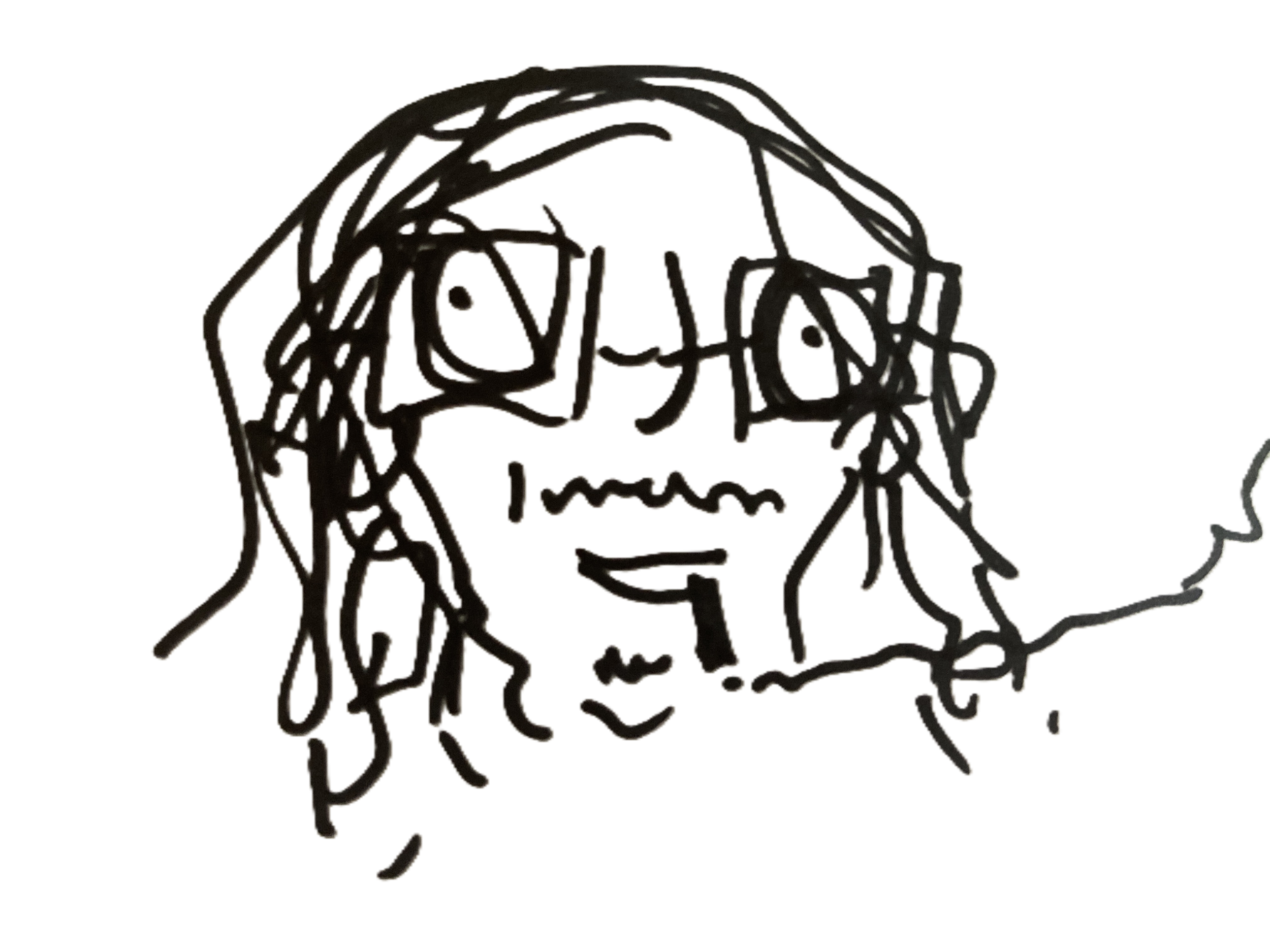
Nathan Knapp, self-portrait
Nathan Knapp is author of Schopenhauer, forthcoming 25 September from Erratum Press, and Daybook (Splice, 2024), which was long-listed for the 2025 Republic of Consciousness Prize. A native of southeast Oklahoma, he lives and writes in Nashville, TN.
Read his 13 Questions Interview here.