
13 Questions for Steve Tomasula
Steve Tomasula is the author of Ascension (a novel about our ever-changing conception of nature); The Book of Portraiture (a novel about depictions/conceptions of the self via technology); VAS: An Opera in Flatland (an acclaimed novel of the biotech revolution); TOC: A New-Media Novel (a multimedia novel about time) and IN&OZ (a fable about art, language and self-discovery). His forthcoming novel, z, is a zombie novel that takes up the spectrum of animal-human-machine consciousness. His essays have been published widely as have his short fictions, many of which are collected in Once Human: Stories. He is also the editor of Conceptualisms: The Anthology of Prose, Poetry, Visual, Found, E- & Hybrid Writing as Contemporary Art. The first international conference on his writing was held last year in Paris. More at: www.stevetomasula.com.
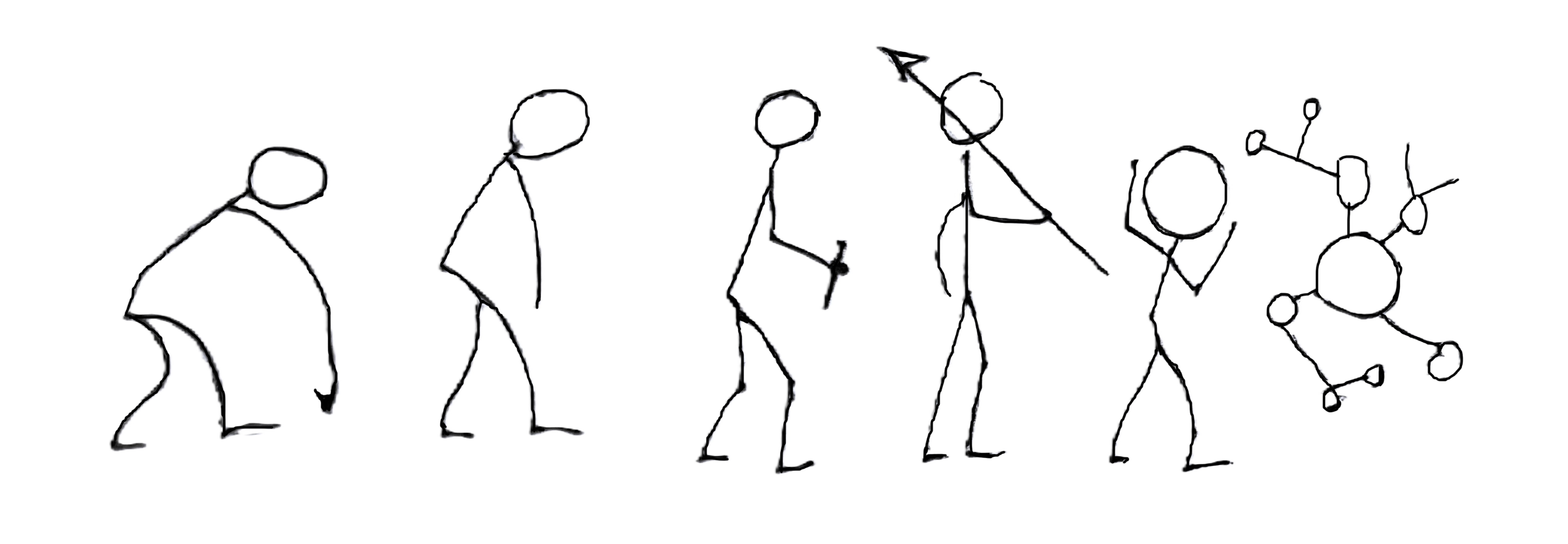
Steve, self-portrait
What are you reading now?
I recently finished Awake, the first book in the trilogy that also includes Sublunar and Visions and Temptation by Harald Voetmann (translation by Johanne Sorgenfri Ottosen). My daughter had given me Sublunar because its story orbits around the 16th century Danish astronomer Tycho Brahe and we’d always loved his biography—the guy was pretty much off the hook. Plus, she’d read it so knew how well written it was, and I found it to be one of those books that take forever to read—even though it’s short—because I kept rereading passages—they were so poetic, the writing simultaneously lush and pristine, exact, the ideas they expressed profound, while often being funny too, often in a dark humor kind of way. It ended up not really being about Tycho Brahe; he’s not even in most of it. But it’s just a jewel of a book, a rare literary gem and work of art. So of course I read the other two as well.
[N]ovels always seemed so perfect, like some kind of fruit that grew on trees.
What book(s) most altered your taste in literature?
Two come to mind: Hemingway’s Farewell to Arms, and then Raymond Federman’s Double or Nothing. The opening of Farewell to Arms was an epiphany for me: I have a distinct memory of reading it during my senior year of college and realizing that I should have majored in English literature (instead of electronics). I’d always read a lot—I had enough courses in philosophy to have a double major, had I known such things existed—but novels always seemed so perfect, like some kind of fruit that grew on trees. Growing up in a steel-mill town, I’d never met an author, that is, someone who actually made these things called books. But reading the first couple of pages of Hemingway I felt I could almost see how he’d edited it—that is, the authorial choices he’d made in writing. How he’d constructed each sentence, then put them in an order to build to an effect at the end of a paragraph, and seeing this book as a thing that was constructed rather than somehow sprung from Zeus’s head had such a powerful effect on me that it literally changed my life. A few years later, I went to grad school in English, where I was exposed to experimental and postmodern literature; I was faced with what seemed like a fork in the road: one could either be an artist with words, or write commercial fiction—that is, write novels that were art or product; or say rather, the choice seemed to be between writing that was trying to work with the form of the novel—in the vein of Hemingway and Stein—writing that called attention to itself as writing—or write traditional novels, that were trompe l'oeils of realism. It seemed to be the choice between visual art that was in the tradition of Cubism or Duchamp—work that worked with the form to say something contemporary rather than repeat the well-worn paths and tricks of realism or the kind of realistic still-lifes and landscape paintings like they sell in furniture stores. I’ve since grown more eclectic than that, but at the time that seemed to be the choice—like choosing between the symphony or rock—and Double or Nothing was one of those novels that was fun, and exciting, and an up-yours to traditional novels the way punk rock was an up yours to corporate music.
Describe the last time a work of literature affected you physically?
Mad Wife by Kate Hamilton. It’s called a memoir, but it’s so literary, so reads more like a novel, a work of autofiction—that uses the dissolution of one woman’s marriage to critique the entire culture. It had that kind of emotional punch that reminded me of Sartre’s Nausea in that when I was young, it made me so nauseous I could only read it in small doses.
Please share a passage from the book nearest at hand.
I threw a metaphoric dart at the bookshelf in front of me and it hit Salvador Placencia’s People of Paper, a book I love and have read multiple times. It opens with the back story behind the creation of Merced del Papel, one of the people of paper of the title, by giving the backstory of her creator, Antonio:
And though she [Merced del Papel] was born inside the factory, she was not a daughter of monks. She had been created without Vatican sanction by a man whose hands were ravaged by paper cuts. His name was Antonio, and like all stories of creators who bring life from the dead, his story began with a struggling butcher, who chased a gray cat, caught it, took off its studded collar, and slit its throat. The fur and organs were scraped from the cutting board into the trash bin and the warm meat was placed in the refrigerated display case with a skewer and flag that read "FELINE 3.15/LB."
Antonio was only a boy, still wearing his grammar school uniform, when he saw his Figgaro split open and naked. At the counter, without crying, he pulled six bills from his pockets and ordered three pounds of feline.
Antonio received Figgaro wrapped in the white of butcher paper, and while there was sadness and the urge to change from his grammar school uniform to one of mourning, he resisted, instead walking to the stationery shop, buying the Sunday edition and a roll of hand-pressed construction paper.
Locked in his room for three days, he folded and tore away at the paper.
On the second day and after thirty-three paper cuts, all minor except for one that cut deep into the meat of his hands, there were thirteen perfect origami organs and ropes of wound capillaries and veins made from tissue paper.
When he unwrapped Figgaro from the butcher paper, there was still warmth in the cat's body, despite the gutting and the hours of refrigeration. The paper heart went in first, followed by the main veins and then the smaller capillaries. Antonio connected liver and lungs, the stomach and newsprint digestive tract, patching the belly with college-ruled sheets, and before the last layer of crumpled paper could be flattened, Figgaro was playing with his tail.
Skipping a few paragraphs ahead: As an adult, Antonio graduates to making origami human organs, and then a whole woman, Merced del Papel:
Antonio split the spines of books, spilling leaves of Austen and Cervantes, sheets from Leviticus and Judges, all mixing with the pages of The Book of Incandescent Light. Then Antonio unrolled the wrapping paper and construction paper and began to cut at the cardboard and then fold.
She was the first to be created: cardboard legs, cellophane appendix, and paper breasts. Created not from the rib of a man but from paper scraps.
There was no all-powerful god who could part the rivers of Pison and Gihon, but instead a twice-retired old man with cuts across his fingers.
Antonio was passed out on the floor, flakes of paper stuck to the sweat of his face and arms, unable to hear the sound of expanding paper as she rose. His hands were bloody, pooling the ink of his body on the floor, staining his pants. She stepped over her creator, spreading his blood across the polished floor, and then walked out of the factory and into the storm. The print of her arms smeared; her soaked feet tattered as they scrapped against wet pavement and turned her toes to pulp.
Here the book takes on this mythic quality—Antonio first locking himself in his room to resurrect his cat—like the 3 days in the tomb—and the imagery of this little kid bringing his pet cat back from the dead by making it out of paper sets us up nicely for his creation story of a first human, a person of paper, a phrase that will cut multiple ways throughout the novel: Antonio has become a creator, an “author” who creates characters, for example, and people of paper can be those who are recognized as people because they have documentation, are characters in a novel, or really anyone authored into existence by society. Merced del Papel is the first here, an Eve figure, whose first act is to walk out into the rain—she’s not cast out of the Garden, so to speak, but tries to make her way in the world on her own. She’s not made of mud, like Adam, or even Adam’s rib like Eve. She’s disconnected from the earth, or even flesh—but like them her creation depends on her author—and I love how the ramifications of this get unspooled throughout the novel.
How do you treat the books you read?
I can’t read without a pencil in hand. I buy almost all the books I read since I write a lot in the margins or underline, and these become a kind of memory for me.
What quality do you most appreciate in a novel?
The writing. The sentences and how they express more than what they say through the choice of words, how the words are arranged, the sentence constructed, and used to build a paragraph, then a passage, the interweaving of them to form a chapter, and ultimately a novel. I can write “my brother” for example, or “My brother, my brother!” Literally, both phrases denote the same thing, but because of the repetition, the sentence structure, the punctuation, the second iteration has more layers. I think this is why I find myself mostly reading poetry these days.
Who is an author you feel should be more widely read?
Without being hierarchical about it, it’s probably a long list of novelists, poets and authors of electronic literature—the kind of writing that often comes from indie or academic presses, or in the case of electronic literature, is published online. There’s a lot of writing that’s not that great from these places, but that’s even more true with the large, commercial presses, the difference being one has an advertising budget, promotion support, and all the doors that those things open to the kind of mainstream review organs, festivals, bookfairs (i.e., tradeshows) and other channels that allow a wider public or distributors to know about a novel, poem, or hybrid work. But if you want names, I’d start with looking at anthologies that might include work by authors like these, e.g. Experimental Writing: A Writer's Guide and Anthology, Lawrence Lenhart and Will Cordeiro eds., For e-lit, the Electronic Literature Collection Vol.4, and maybe the anthology I edited: Conceptualisms: The Anthology of Prose, Poetry, Visual, Found, E- & Hybrid Writing as Contemporary Art.
What book are you avoiding reading?
Putting off reading the other six volumes of Proust just for the sheer length. It’s a real commitment. I’d also like to get around to reading the second volume of Knausgård’s magnum opus, and the other six volumes of Jon Fosse’s septology (I guess you see a pattern here?).
What novel would you add to our current season (on Family) and why?
Maybe I’d add Solar Bones by Mike McCormack, another one-sentence novel that explores one man’s life as a mesh of family, social and professional interactions. Definitely Woman’s World by Graham Rawle—centered on a family of two: mother Mary and one of her grown children. This is a work of wonder; one of those books you can’t believe exists as its text is literally cut (I mean with scissors) from women’s magazines from the ‘60s then reassembled like a ransom note, appropriating along the way all the gender attitudes and biases built into women’s magazines of the time about families, clothing, the role of acting your gender, yet casting them through the lens of a contemporary consciousness.
What book would you like to be the last one you read before you shuffle off this mortal coil?
To be honest, it would probably be the book I’m writing at that time, which I haven’t started and have no idea what it might be.
If you were to design a literature course around a singular word, what word would that be, and what books might appear on the reading list?
I’d always wanted to teach a course in Big (Big Books, Big Ideas): the kind of books that are big in idea, big in aesthetics, big in page count, immersive in that they become part of your life for a while but don’t get put together for that same reason. The aesthetics of all of these novels are breathtaking, so they share that, and they are all so rich and multilayered that a blurb doesn’t begin to describe them. But here’s a try:
Moby-Dick—if there is a Great American Novel, this would probably be it—a marriage of philosophy, natural history, spiritual belief and American capitalism at the moment when the country was transitioning into the modern economy that is familiar to us.
The Tunnel by William Gass—very few writers write a more beautiful sentence, be it about a landscape or a heap of corpses—which is again one of the things this multilayered novel is about: the politics of aesthetics, the aesthetics of atrocity, the writing of history as a construction.
The Books of Jacob by Olga Tokarczuk: the detail of research in this historical novel is absolutely breathtaking. But, of course, it’s not just the detail: it’s the way she weaves nonfiction and fiction to state the obvious about Jews in Poland, but which revisionists work hard to erase in their tellings of history (bonus points: it seems to have lessons for what we are going through in America, with our own rightwing working hard to rewrite history).
Gravity’s Rainbow by Thomas Pynchon—a monumental postmodern novel, but a monumental novel in any case for its richness, its humor, its linguistic gymnastics. But the jokes and limericks and puns are not just for fun—the novel opens up the role of language in creating the systems we live in, and how they take on a life of their own, be they the atomic bomb or for us AI). (I don’t understand how this novel isn’t on everyone’s list of Great American Novels. Everyone reads his Crying of Lot 49, because it’s short I guess, but they are really only getting Pynchon light by doing so.) Read the first line, and if that doesn’t draw you in, nothing will.
Anne Carson’s Nox: a hybrid image-text novel that brings the material of the book into the narrative and together unfolds (literally as the novel is printed on one gate-folded piece of paper and comes in a box) as a philosophical meditation on memory and memorial, using here as a springboard her re-reading of an elegy in Latin and using it to shed light on the death of a brother, how we remember, translate, and memorialize what can’t really be put into words.
I think most people would put David Foster Wallace’s Infinite Jest on a list like this, but I’d rather have The Pale King, just because I like it more, maybe because the middleclass in it is more familiar to me than things like tennis pros—but again for its marriage of aesthetics and the mind-numbing work of being a drone in a system, as so many of us are.
2666 by Roberto Bolaño: hard to not think of this as the greatest novel yet written in and about our century—or at least its first quarter: the way it has a no-there-there center, around which so much of our global world revolves, and again, just for Bolaño’s ability to write and put together sentences that make you stop reading just to reread them.
Ducks, Newburyport by Lucy Ellmann makes me think that it’s the kind of novel a Tolstoy would write if he had been a housewife in Ohio and not writing about Russian revolution but rampant consumerism, gun violence, the national disaster named Trump, and the rest of the things that make up culture in America—only doing it with humor, word play, and doing it mostly in only one, 1,020 page sentence.
As well as its complement: Small (Small Books, Big Ideas). The books on this list all seem like gems to me, and they do so much that they sometimes make me think no novel should ever be over 150 pages.
Dra— by Stacy Levine. Anyone who has ever had to look for a shit job will relate to this novel, as Dra— (a character with half a name) wanders a kind of Eraserhead, industrial dystopia where bi-planes fly indoors, leaking oil, as she searches for a job, as well as the identity that she thinks it will give her.
The Stranger by Albert Camus if paired with The Meursault Investigation by Kamel Daoud, which is a rewriting of The Stranger from the viewpoint of its unnamed Arab victim, and makes that first novel impossible to see the same way again.
Frank by R.M. Berry. Another unwriting of a classic, this time Shelly’s Frankenstein. This is such a great, and funny novel, and one that should be read far more, especially by writers, but given its density, and how much a reader has to bring to it to get the literary puns, it’s far from the kind of novel one would find for sale in an airport. In Berry’s novel, Frank Stein, cousin of Gertrude Stein, goes to Harvard to study “American letters”; seeing deeper into the inner workings of his chosen field than his classmates, he ends up creating an experimental novel. Recognizing belatedly what a career-ending first step this can be in a world that holds the novel to be a form of glossy entertainment, he first tries to disavow his creation, then ends up pursuing it into the swamps of language.
Dan by Joanna Ruocco. A modern-day parable about a town or state of mind (it’s hard to tell but safe to say it’s both) that is dominated by men who could all be named Dan (and reminds me of Stacy Levine’s novel Francis Johnson whose existential dilemma hinges on whether she should go to the town dance or live in Little Munson or Big Munson). Each turn of phrase is like language slipping on a banana peel, just a pleasure to read for its fusion of dread and absurdity under the constraints of society and mind.
The Age of Wire and String by Ben Marcus. Like Marcus’s Notable American Women, I love how this novel-in-vignettes lays down premises in the form of prose poem-like stories, here of materials like wire and string, to create its own logic; I’ve actually been meaning to reread this book through a new-materialist lens to see what that would offer.
Distant Star by Roberto Bolaño, a detective novel that isn’t a detective novel but is instead a novel that uses the form of a detective novel to show how language creates a reality (This could probably be another category; Paul Auster’s City of Glass comes to mind). In Bolaño’s novel, a poet is enlisted to identify by close reading the poetry of another poet who was also one of the mass murderers in Pinochet’s military.
Joanna Drucker’s Narratology is an artist’s book-cum-Bildungsroman. Told through handmade paper (i.e., a craft often associated with women), translucent sheets, font styles, and strategic folds, a different genre of pulp fiction is used to tell each chapter of the story of a girl’s life from birth (Fairy Tale) through downfall (Horror): a plot so common it’s tragi-comic, and pushed to extremes to make us see the role of language in giving us the forms and options by which a woman can live.
Europeana by Patrick Ouredníck. The “great man” view of history recounts the past through the force of its individuals: Napoleon, Hitler…. But Europeana imagines the 20th century as told through its statistics, facts, and patterns. A very different history emerges, one where all inventions—from the bra to mustard gas—are leveled in the march “progress,” and the constant effort to “improve man” results in the repetition of genocides, political and technological disasters that come with a discounting of human worth.
Drought by Debra Di Blasi. This is probably Di Blasi’s most traditional book, but her descriptions of parched land, dying cattle, and the couple trying to hold their life on a ranch together are so pristine, so powerful that they’ve stayed in my mind for years.
First, Body by Melanie Rae Thon. It just struck me now that this is the only collection of short stories on this list but the title story alone makes this collection a standout. The comma in the title is important as it reflects the push-pull between body and fate that the story struggles with, the driving metaphor being ER doctors who have to first make sure the body doesn’t die before they can worry about anything else. The lyricism of characterizations and descriptions of bodies and hospitals and accidents and cadavers and morgues make this book achingly poignant.
Speedboat by Renata Adler. Told through a series of flash stories that sometimes harmonize, contrast, or recontextualize each other, the novel moves fast, like a speedboat hitting wave after wave—across a multitude of topics from race relations to dating to war—as Jen Fein, the narrator and journalist lays out pieces that cohere by the end as do chips in a mosaic.
Happening by Annie Ernaux. This seems to be the mother of autofiction, a book that those writing in this mode today would be well rewarded for revisiting for Ernaux’s depiction of a woman trying to get an abortion in France at a time when even asking your doctor about it could land you in prison.
I’d have to add Jon Fosse’s The Other Name, the first part of his septology, about two men and the different paths their lives could have taken, which is told in this really repetitive fashion that becomes hypnotic, and makes reading more like dreaming.
Also add to this list the Harald Voetmann trilogy described above.
Sorry, long answer—one book led to another and I got carried away….
In what character in literature do you most recognize yourself?
I’ve always liked the narrators of Jean-Philippe Toussaint’s novels, so maybe I’ll go with the unnamed narrator of Camera, if by “recognize yourself” we mean who would you like to have a beer with—meandering through a day, having the mundane, such as applying for driving lessons, mushroom into questions about life. If empathy is a way of being with another, maybe I’d say Bashmachkin in Gogol’s The Overcoat—a poor, what we’d call a cubical drone today, scrimping to save to get a new coat; the way he wants so little and can’t even have that, you have to feel for the guy—especially for what his ghost ends up doing at the end—stealing the coats of the wealthy to teach them compassion.
Why read literature?
People read for lots of reasons: for personal or cultural memory, therapy, entertainment, for the politics—probably there are as many reasons as there are readers. In terms of literature, maybe it would be for all of the above?—literature as opposed to just entertainment—is layered that way. For me it’s the aesthetic rush of ideas expressed through the form that the ideas are given—reading is an experience that can’t be duplicated in other media, which offer their own pleasures. For me the reason is probably congruent with the answer to the question, Why would a person rather look at a painting of a landscape inst